AI squandered America’s goodwill. Clean power could help revive some good faith
A YouGov poll commissioned by EnergyTag, found twice as many Americans support a renewable-powered data center as a fossil-fueled one. Even among Trump voters, support rises from 25 to 40 percent when the power source is clean. By almost two to one, Americans want “clean” to mean matching use hour by hour, rather than averaged across a year. This distinction is important to actually preventing pollution and cost burdens on citizens, which is why it should be put into law.
Industry’s approach to power is split. Of 21 major projects EnergyTag examined, 11 bring new clean power and storage that has potential to provide electricity around the clock. Ten others plan 30.8 gigawatts of new gas between them. That would emit about as much carbon dioxide as Pennsylvania’s entire power sector. Meta, Amazon, Microsoft and Anthropic all have gas-heavy sites on the list.
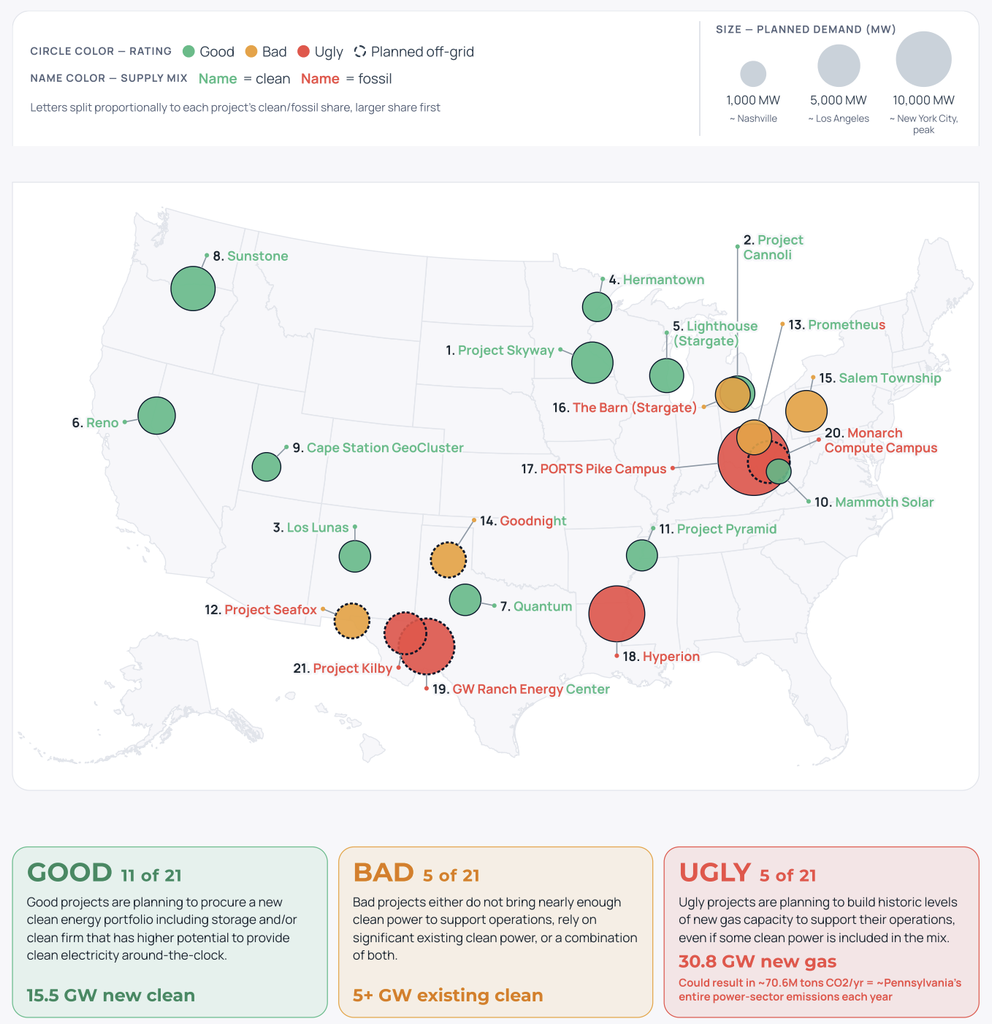
The same companies appear on both sides. OpenAI is a partner in Port Washington but also in Ohio’s PORTS Pike campus, which plans 9.2 gigawatts of gas. Clean power is a decision these companies know how to make. Making the dirty decision has a cost: researchers at UC Riverside and Caltech estimate over 90 percent of data centers’ air pollution health damage comes from the power plants feeding them.
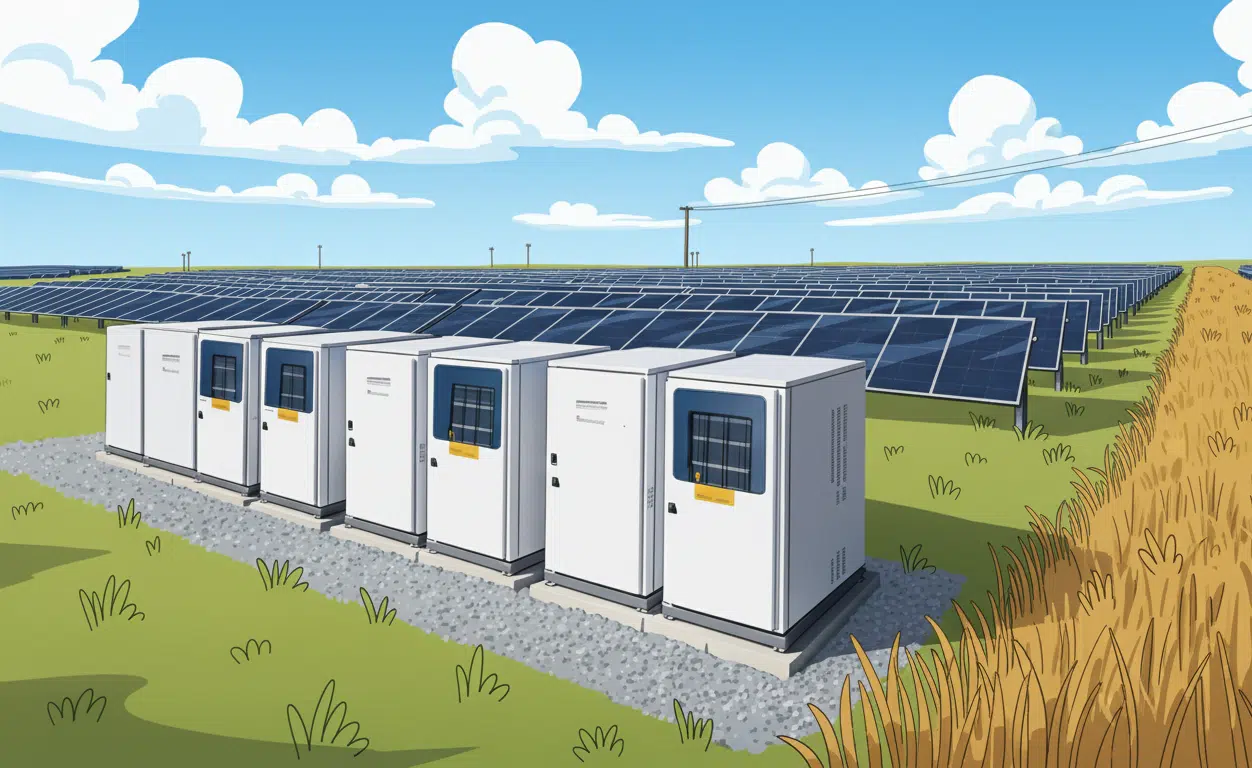
Project Skyway in Pine Island is one of the cleaner proposals in America, according to our analysis. Its developers, Google, plan a combination of wind, solar, and storage to power it. But its lack of thorough environmental review has meant it’s been on hold for months. Just last week, a settlement mandated that a new environmental review is required, with mitigation plans to be agreed upon by city and state agencies before construction resumes.
Local opposition has killed at least $260bn of US data center investment this year, according to Heatmap Pro. Half of it went in the last quarter alone. More than 10 states have paused or cancelled data center tax breaks. With midterms tomorrow, campaigns have spent more than $31mn on ads attacking data centers, CNN reports. The backlash travels, too: Ireland has all but frozen new data center grid connections around Dublin.
Project Skyway shows that clean power cannot buy consent. People object to water use, secret deals and rising bills, whatever the power source. Some towns will rightly say no. But how data centers are powered still matters. It matters to voters, it matters for the environment, and it’s part of the problem which policymakers can fix.
Faced with the backlash, states are reaching for the bluntest tools: cancelling tax incentives and pursuing data center moratoriums. Projects that still go ahead may move to states with looser rules, where some are planning to build their own gas plants off the grid. Five of the 21 projects we tracked already plan to build off-grid gas.
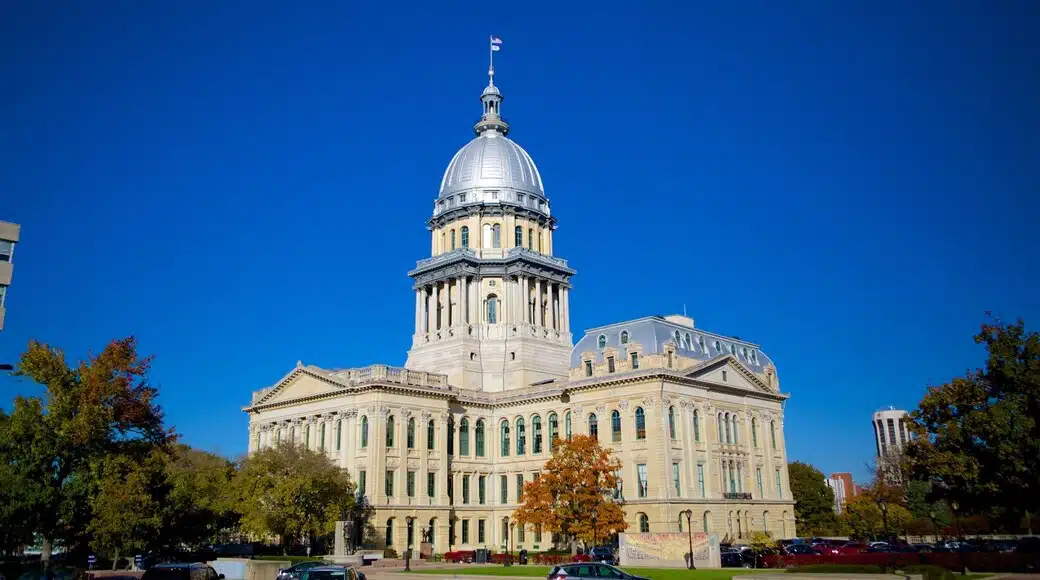
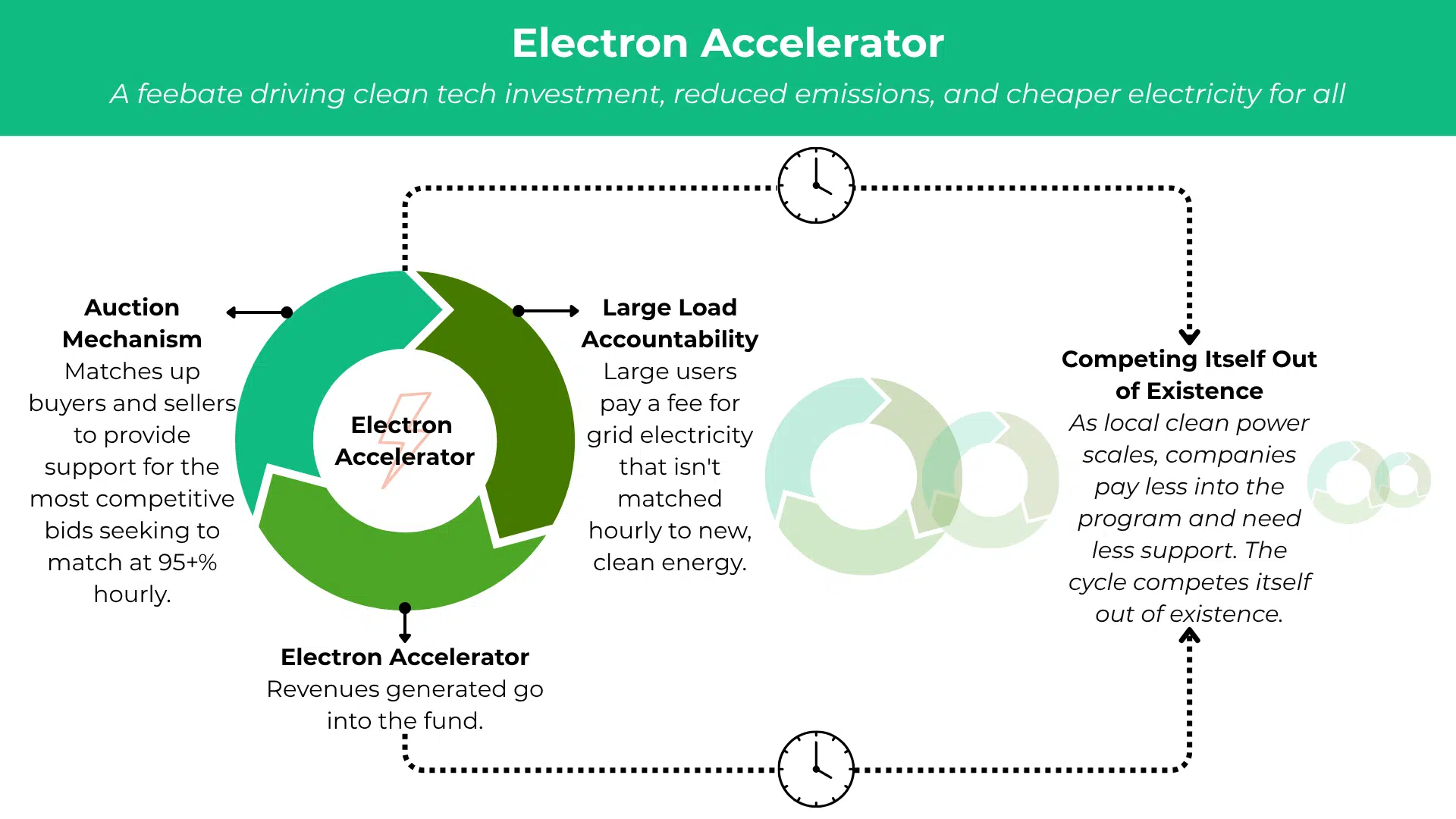
A better deal ensures local support and attaches strings, and the strings must be hourly matched, local, new clean power. When I testified to Illinois lawmakers in April, I made one point above all. A data center buying only solar can claim to be “100 percent clean” while gas powers well over half of its hours. Illinois has now acted. A new bill from state Representative Jay Hoffman would require large data centers to match every hour of their use with new, local clean power from 2030. Those that fall short would pay into a state fund that auctions contracts for round-the-clock clean supply. EnergyTag designed this mechanism, which we call the Electron Accelerator. The industry pays to close the gap, rather than households.
Right now, this idea is being considered in state legislatures. But to truly address the “leakage” challenge of dirty data center development seeking geographies with the most lax rules, policy needs to be passed at the federal level. That is where the House of Representatives Sustainable Energy and Environment Coalition has stepped in to highlight the Electron Accelerator as a top idea to support sustainable AI development in their Thriving Economy Project policy blueprint. Additionally, Senator Whitehouse and Representative Cohen have introduced the Clean Cloud Act, which reflects many of the same principles.
On November 3, data centers will be on the ballot in races across the country. Candidates who want to look tough on Big Tech have a better option than simply reverting to moratoriums. Strict clean energy requirements on data centers make tech companies put their money where their mouth is on sustainability commitments, codifying them in law. No more blind trust, no-strings-attached incentives, and cost and pollution burdens falling on citizens. We can and should tap into tech companies’ abundant resources and use them to upgrade our grid to be cleaner and more efficient for everyone.