

Vietnam Waited Years for DPPA, Now the CBAM Question Begins
Vietnam’s clean energy market has talked about Direct Power Purchase Agreements, or DPPAs, for many years. Developers wanted new routes to sell renewable electricity. Large electricity users wanted better procurement options to meet sustainability goals. Investors wanted clearer commercial signals for new projects.
DPPA became one of the most important missing pieces in Vietnam’s power market reform story.
After years of discussion, Vietnam introduced its DPPA framework through Decree 80/2024/NĐ-CP and later refined it through Decree 57/2025/NĐ-CP. The framework allows renewable energy generators and large electricity users to transact directly, including through grid-connected structures.
I explained Vietnam’s DPPA design and its 30-minute settlement context in an earlier EnergyTag blog. Vietnam’s DPPA framework includes both private wire and grid-connected models. The grid-connected model includes a contract-for-difference (CfD) structure, similar to a virtual PPA, where renewable electricity is sold into the market, and direct physical delivery between generator and consumer is not required.
That makes the first transaction especially important.
This article explores what Vietnam’s first DPPA transactions tell us about market readiness, how grid-connected DPPA structures interact with emerging Carbon Border Adjustment Mechanism (CBAM) electricity requirements, and what this may mean for other emerging markets developing new renewable procurement structures.
Samsung and Đức Huệ 2: A Prominent First Example
Samsung Electronics Vietnam has emerged as the first corporate buyer under Vietnam’s DPPA mechanism through Gia Lai Electricity Joint Stock Company’s 49 MWp Đức Huệ 2 solar project in Tay Ninh.
As Vietnam’s first operational DPPA transaction, the Samsung–Đức Huệ 2 transaction provides an important reference point for future implementation.
GEG’s company disclosures also show that Đức Huệ 2 is its first project combining DPPA participation with battery energy storage system (BESS) integration.
According to sources familiar with the transaction, the project includes battery storage, with some market participants referring to a 10% BESS configuration. Public technical details remain limited, so this should be treated as market information rather than verified technical specifications.
The inclusion of storage suggests that Vietnam’s first DPPA example reflects the growing role of flexibility alongside renewable generation in corporate procurement.
An Early Signal on Flexibility
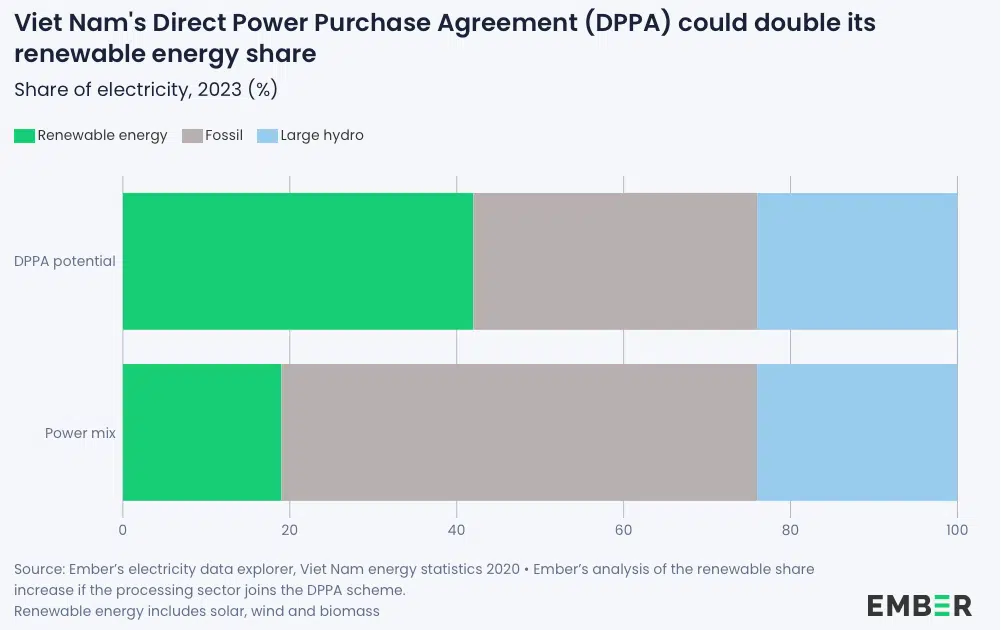
Fig. 1 Viet Nam’s Direct Purchase Agreement could double its renewable energy share.
Vietnam’s grid-connected DPPA model exposes renewable generators to 30-min market settlement. According to Ember, the renewable energy share could increase from 19% to 42% if manufacturers in the processing sector purchased electricity through DPPA.
As renewable penetration increases, daytime prices can become less attractive during solar-heavy periods.
Storage matters because it can:
- Improve project economics
- Support more flexible delivery
- Increase the value of renewable generation exposed to market prices
This makes the Samsung–Đức Huệ 2 transaction interesting.
It is evidence that DPPA can work. It also suggests that Vietnam’s early DPPA projects may increasingly integrate flexibility alongside renewable generation rather than treating it as a later addition.
This could become an advantage. As renewable penetration grows, markets increasingly face challenges around integrating variable generation, managing periods of surplus supply, and shifting electricity to when it is needed. Vietnam may have an opportunity to build some of these capabilities earlier as its market evolves.
The CBAM Question
The Samsung–Đức Huệ 2 transaction arrives at an interesting moment.
After years of discussions, Vietnam finally has a working example of grid-connected DPPA implementation. At the same time, international discussions around electricity accounting are evolving rapidly, particularly in relation to the CBAM and how companies demonstrate actual electricity use and associated emissions.
This creates an important question for Vietnam’s market:
Will Vietnam’s grid-connected DPPA structure align with CBAM requirements for using actual electricity emissions?
CBAM is changing how companies think about electricity emissions. For imported products covered under CBAM, companies seeking to use actual electricity emissions must demonstrate a much closer relationship between renewable generation and electricity consumption. This is very different from older approaches, where annual renewable electricity procurement claims were often sufficient for voluntary reporting.
For electricity-related claims, three questions become particularly important:
- Can renewable electricity be credibly linked to the consuming facility?
- Can the electricity reasonably be delivered within the relevant grid area?
- Was renewable electricity generated at the same time electricity was consumed?
Vietnam’s DPPA model is interesting because it already incorporates 30-minute wholesale market settlement, providing stronger temporal signals than many emerging markets.
But timing alone may not be enough.
The more difficult question is whether grid-connected DPPA structures based on virtual/ CfD-style arrangements can satisfy expectations around physical linkage, deliverability, and time matching when companies want to use actual electricity emissions instead of default values.
Where Vietnam’s DPPA Looks Strong, And Where Questions Remain
From a market development perspective, the DPPA framework makes sense. It creates investment signals for renewable energy projects and provides large electricity consumers with a practical pathway to support new renewable generation.
However, when companies seek to use actual electricity emissions under CBAM, the discussion increasingly focuses on physical linkage, deliverability, and hourly matching of renewable electricity generation and consumption. This creates questions for grid-connected DPPA structures based on virtual or CfD-style arrangements, where the commercial relationship exists but direct physical delivery between generator and consumer does not.
That is where stakeholders are seeking greater clarity. The table below provides a high-level assessment of Vietnam’s grid-connected DPPA model against key requirements associated with using actual electricity emissions under CBAM.
| Feature | Vietnam Grid-Connected DPPA (Virtual / CfD Structure) | Potential CBAM Implications |
| Electricity procurement structure | Renewable generators sell into the market while consumers continue purchasing from utilities | Raises questions because electricity is not directly supplied from a generator to the consumer |
| Financial settlement | Buyer and generator settle differences between the market price and strike price | Financial linkage alone does not demonstrate electricity consumption |
| Physical linkage | Electricity flows through a broader grid | Physical linkage and deliverability become harder to demonstrate |
| Consumer electricity source | Consumer continues purchasing electricity from utilities | Renewable generation and consumption remain commercially separated |
| Temporal relationship | Wholesale settlement occurs every 30 minutes | Timing signals exist, but consumption is not automatically matched with generation |
| Renewable asset visibility | Renewable project and corporate buyer can be identified | Positive for traceability and verification |
| Storage integration | Projects may include storage | Improves flexibility but does not automatically resolve linkage questions |
The assessment highlights why stakeholders are paying close attention to this issue.
Grid-connected DPPA may become one of the most scalable renewable procurement options available to large electricity consumers in Vietnam. However, uncertainty around its treatment under CBAM creates questions for exporters, project developers, and corporate buyers seeking to use actual electricity emissions rather than default values.
Private wire structures appear to have a clearer pathway, but they may not always be practical or scalable for every project or consumer.
CBAM is not the only place where electricity accounting is becoming more granular. The Greenhouse Gas Protocol Scope 2 revision process has also proposed stronger approaches around hourly matching and more granular accounting, although it currently does not include the same physical linkage requirements being discussed under CBAM.
A Broader Question Beyond Vietnam
Vietnam is unlikely to be the only market facing this challenge. As renewable procurement models continue evolving across emerging markets, greater clarity on how these structures are treated under CBAM could become increasingly important for both market development and investment decisions.
Without greater clarity, developers, corporate buyers, and policymakers may face uncertainty around which procurement structures remain viable under increasingly demanding electricity accounting frameworks. For markets like Vietnam that have spent years developing new procurement mechanisms, that uncertainty matters.