

Round-the-Clock Renewables: Making Use of the Granularity Taiwan Already Has

Taiwan built the physical infrastructure for a highly sophisticated and granular electricity market, and neither its procurement methods nor accounting methods reflect it. You can find our full report on this here.
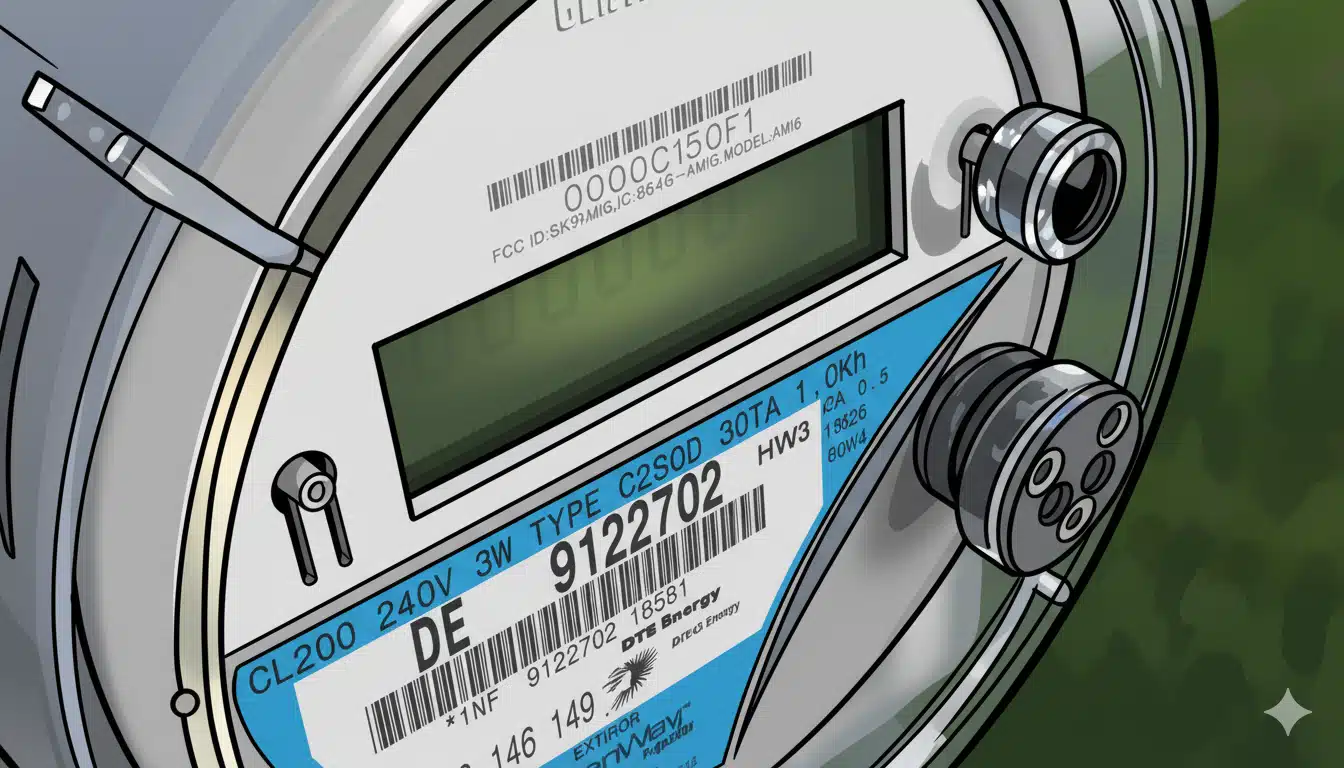
Taiwan’s corporate renewable procurement runs on sub-hourly settlement and is grounded in grid reality. Every high-voltage consumer in Taiwan is already metered at 15-minute time resolution. Authorities issue Renewable Energy Certificates, or T-RECs, in Taiwan, almost entirely against physically delivered electricity. In effect, all corporations procuring renewables are practising hourly matching, even though claims are still being made annually.
Round-the-Clock (RTC) renewable procurement is the natural use case for the infrastructure Taiwan already has. Today, we use infrastructure to produce only one annual number. However,n it can generate a continuous, verifiable record of when clean power was actually delivered against a buyer’s load, hour by hour. Adding price signals using these data will show the value of firming renewable procurement in the hours that the grid most needs it.
The Value of RTC to the Grid and Consumers
Fig 1. % change in LNG and renewable generation before and after the closure of nuclear.
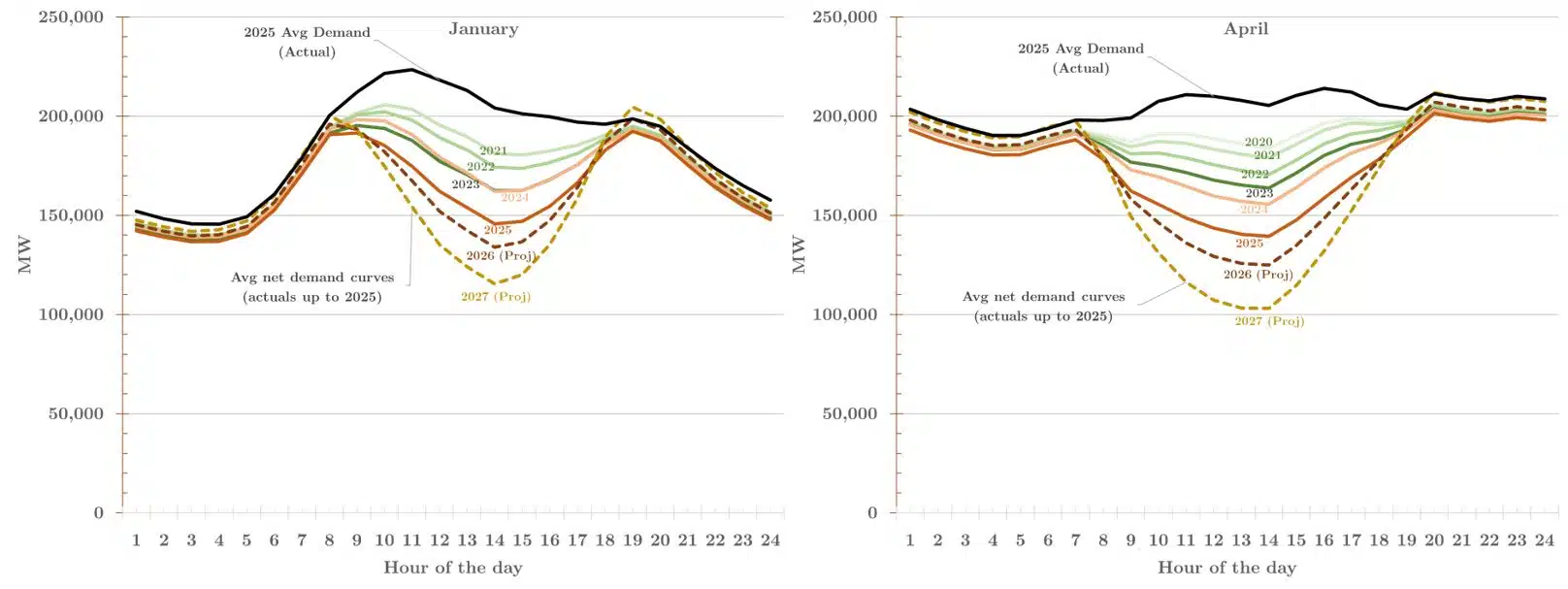
Since Taiwan closed its last nuclear plant in May 2025, the grid has leaned harder on imported LNG, now accounting for more than half of total generation. Renewables vary seasonally and diurnally. Seasonally, wind output collapses in summer just as demand peaks. On a daily basis, an evening ramp follows midday solar oversupply, which gas must cover ( Fig 2).
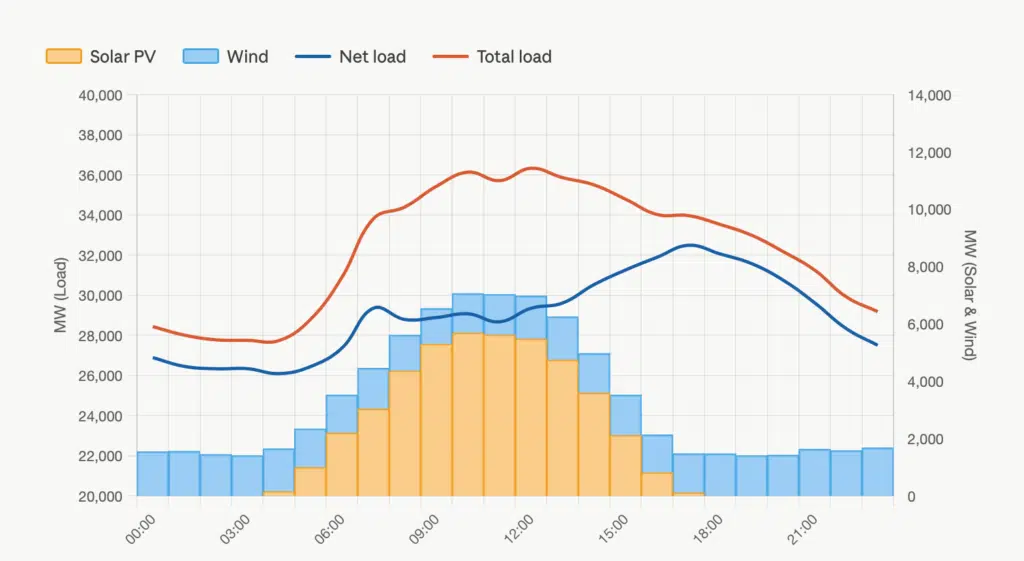
Fig. 2 Average net load by hour in Taiwan.
The system cost of running this generation profile is immense. Taipower has accumulated over NT$420 billion (roughly USD 13 billion) in debt. With over 80% of its generation remaining fossil-fired, lenders subject to sustainability covenants are signaling they will not keep rolling that debt over.
Annual matching is masking the system cost of running on intermittent renewables, while ample evidence supports how hourly matching contributes to energy security for the grid and benefits consumers. Transition Zero models indicate that shifting just 5% of demand to 80% hourly-matched renewables would save roughly US$1 billion annually in fuel costs by displacing gas and coal. It also shows that hourly matched Power Purchase Agreements (PPAs) could be even cheaper than the current industrial tariffs.
RTC Creates More Markets For Batteries
Currently, the ways for batteries to play a role in supporting the grid to shift solar generation to night are limited. The ancillary market is one of them. However, since the second quarter of 2025, that oversupply has pushed clearing prices on the ancillary market to zero. With limited price spreads on Time of Use (ToU) prices, the economics are still not strong enough to make behind-the-meter (BTM) storage commercially attractive.
Creating more avenues to market will be crucial for storage to play a larger role in demand flexibility: by selling time-shifted clean electricity directly to corporate buyers under a storage-backed PPA, or by reforming T-RECs to recognise time-shifted generations.
T-RECs: On the Way For Reforms
Taiwan built its wheeling system around strict 15-minute matching. This model mandates that certificates and physical electricity must move together, supported by pre-existing smart-meter coverage. But fixed-volume contracts can’t match a buyer’s actual load shape, so every interval produces unmet demand or surplus. Taiwan’s fix was a second step: regulators reallocate unmatched volume within the same time-of-use block instead of the same 15-minute interval. That solves the residual problem but erases the time signal.
Taipower’s Flexibility Allocation Pilot (October 2025–September 2026) lets a retailer pool offtakers and redistribute generation across that group at strict 15-minute intervals, solving the load-shape problem fixed contracts can’t.
A pending amendment to the certificate regulations would let generators without a feed-in-tariff contract transfer unclaimed certificates to third parties. The tradeoff means that with more unbundled T-RECs in circulation, sub-hourly matching is crucial to maintaining the credibility of corporate renewable claims.
What Can Corporates Do Today to Hourly Match?
Given the infrastructure readiness, hourly matching or even sub-hourly matching are already possible for corporate consumers. RTC renewable procurement is not yet available for large corporations. However, Small-Medium Enterprises (SMEs) can access RTC products from Taipower’s Small Scale green power auctions. Concrete steps include:
For large corporate buyers:
- Procure renewables through a wheeled or direct-supply PPA. These are already physically delivered and settled at 15-minute resolution by law.
- Pull your own 15-minute consumption data from Taipower’s high-voltage user portal or the Taiwan Power app.
- Line up that interval data against your PPA’s 15-minute generation data yourself. This is already the practice of hourly matching, even though the T-REC itself still only carries a monthly volume.
For SMEs:
- Buy into Taipower’s small-scale green power auction, specifically the all-day product matched to combined solar and wind.
- Match your own 15-minute consumption data against that purchased volume to build your own hourly-matching record, the same way larger buyers do with PPA data.
What Should Policymakers Do Next?
Three steps matter most.
First, build a 15-minute-matched certificate tier on the Flexibility Allocation Pilot’s existing data, rather than waiting for a full registry redesign.
Second, define what “hourly-matched” means in Taiwan’s own context: the grid already settles at 15 minutes, so the standard could be finer than the hourly benchmark used elsewhere, but that requires an explicit decision.
Third, give storage a path to compensation outside the ancillary-services market. Storage-backed PPAs and certificates that recognize time-shifted output would open a real revenue path for idle batteries.
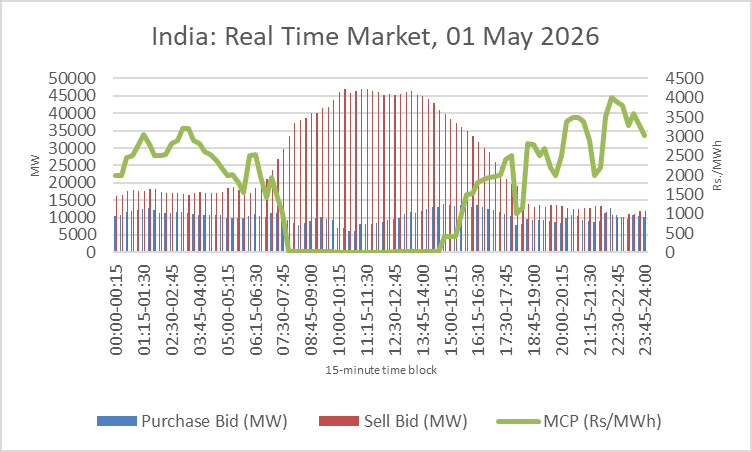
A real-time spot market is the long-term fix. This would make 15-minute T-REC matching straightforward and properly reflect the economic value of RTC procurement.