

Korea Hourly Matching Readiness Report: Hourly Matching is Both Feasible and Valuable for Korea
This blog outlines some of the key findings from our recent publication Korea Hourly Matching Readiness Report, published in conjunction with Korea Sustainability Investing Forum (KOSIF).
South Korea, the world’s third-largest LNG importer, is confronting critical energy security risks, from extreme price volatility to grid instability. These are often caused by solar energy flooding the grid during the day. The path toward immediate energy security and grid stability is clear: hourly energy matching. This is not just becoming a global standard for clean energy, but is both feasible and valuable for the Korean market.
When the Strait of Hormuz closed this March, Asian LNG spot prices jumped 54% in a single week. South Korea, the world’s third-largest LNG importer, scrambled to stabilize fuel prices at a cost of $75 billion. As data center electricity demand surges, the risk is that new infrastructure becomes locked into fossil fuels and is even more sensitive to price volatility.
Round-the-clock renewables lower reliance on imported fuel and provide clean power at zero marginal cost at all hours. Getting there requires both procurement pathways that enable time-based sourcing and mechanisms to verify that the clean energy procured matches consumption hour by hour. Korea has the data granularity, but its barriers lie in procuring renewable power itself and the absence of an hourly certificate framework.
Hourly Matching Creates a Business Case For Grid Stability
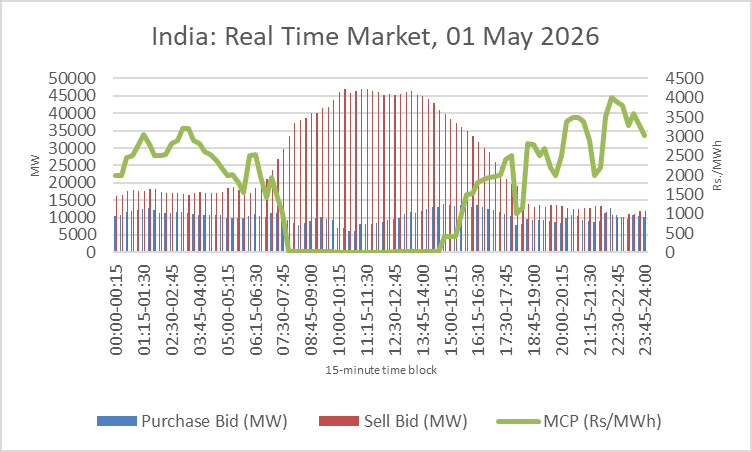
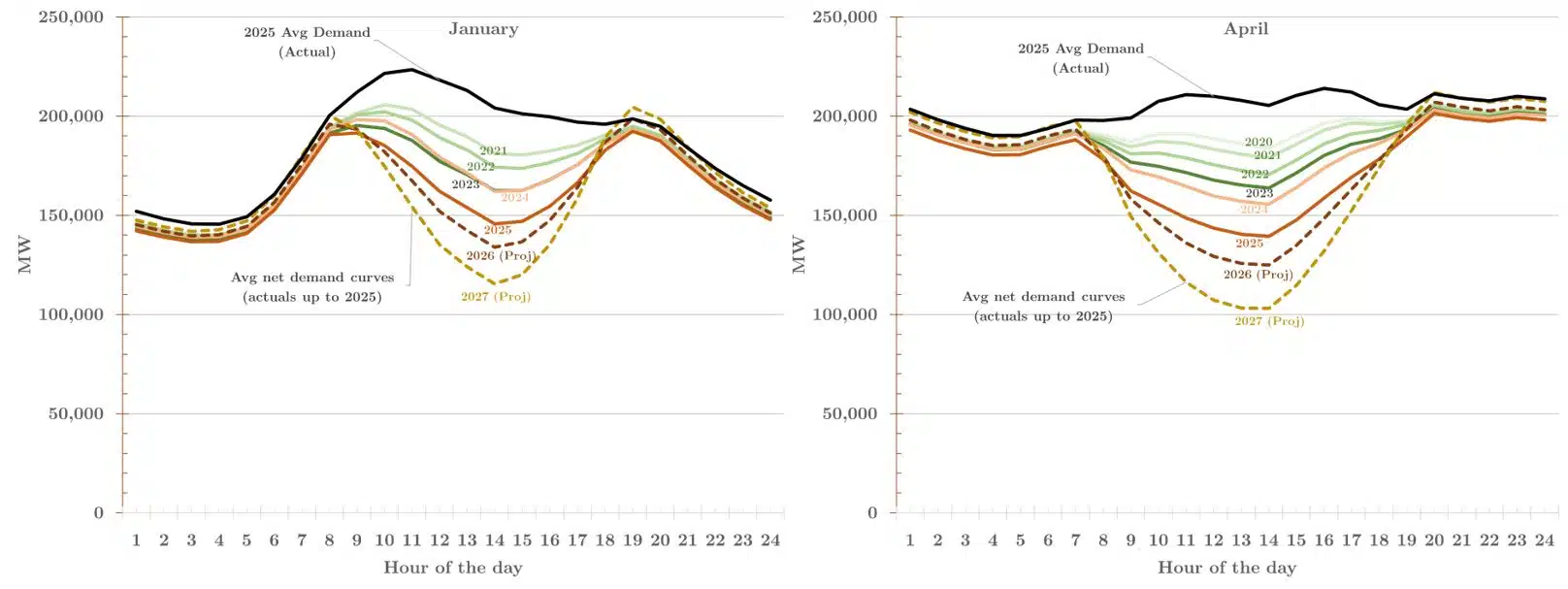
Over 70% of Korea’s renewable energy comes from solar, which creates a power imbalance. Solar production floods the grid during the day but vanishes at sunset. This requires traditional power plants to ramp up output quickly in the evening to prevent blackouts.
By 2040, up to 32% of solar and wind generation may be curtailed without adequate storage. Hourly accounting exposes the gap and creates a price signal for the market. Corporations seeking verified hour-by-hour coverage would pay a premium for time-shifted solar, giving battery storage a demand-driven revenue stream.
This matters because Korea’s arbitrage potential, storing cheap midday solar power to sell at a profit during expensive evening peaks, is stalled. Because the government regulates electricity rates, the price difference between “cheap” and “expensive” hours is too narrow to make expensive battery systems worth the investment.
Korea’s Structural Advantages
Korea’s single bidding zone and physical delivery model kept procurement tightly bound to real consumption patterns. As international standards, such as the Greenhouse Gas Protocol, converge on hourly accounting, Korea’s approach shifts from a structural feature to a competitive advantage.
Korea also has the technical infrastructure: AMI smart meters deployed to all 20.4 million consumers, hourly wholesale settlement through Korea Power Exchange (KPX), and Power Purchase Agreements (PPA) transactions settled hourly by default. The gap is institutional, not technical. Hourly data flows through KPX systems but doesn’t flow into K-RECs (Korea’s Renewable Energy Certificates), which only provide monthly granularity.
Not All Procurement Methods Are Equal
In Korea, 98% of companies “go green” by paying a Green Premium, a simple extra fee on their power bill. However, this is just a paper trail; it has no generator linkage, timestamps, or audit trail. It doesn’t prove exactly when or where the clean energy was produced PPAs (direct contracts with power plants) are the most ready pathway for hourly matching: they already produce exactly the temporal data that international frameworks require.
The PPA cost story is also changing. Industrial tariffs are rising while solar costs fall. Two recent policy changes are expanding supply: the minimum generator capacity threshold has been abolished, and Renewable Portfolio Standard (RPS) generators can now enter the PPA brokerage market. The new Energy Storage System – PPA framework further reshapes the economics by allowing co-located storage to absorb excess midday solar and discharge during evening deficits, reducing costly supplementary supply from Korea Electric Power Corporation (KEPCO).
However, buyers should explicitly choose an hourly settlement. Recent policy updates introduced a monthly average option that allows buyers to claim renewable energy in hours when the contracted generator produced nothing. This destroys the hourly data trail, undermines the storage business case, and is incompatible with every international hourly matching framework. KPX already settles hourly by default; monthly averaging is a step backward.
What Can Corporate Buyers Do Today?
First, prioritize PPAs with hourly settlement. Even for a partial share of the load, this builds the data infrastructure needed for future compliance. Second, start approximating hourly load profiles. Korea’s smart meter rollout means consumption data already exists, and the GHGP accepts load profile approximation as a step toward hourly matching for both location-based and market-based accounting.