
EnergyTag is an independent clean energy non-profit. We pair deep technical expertise in round-the-clock clean power with policy advocacy to make electricity cleaner, cheaper, and more secure every hour, everywhere.
Explore Our Work
We see a future where clean electricity powers our homes, transport, industry, and the digital economy. As demand grows, power must stay affordable and reliable. That means clean power around the clock, not just when the sun shines or the wind blows.
Incentives of the past do not create power markets of the future. Power markets and clean energy rules still reward cheap clean power at any time, not clean power when and where it’s needed. EnergyTag exists to change that. We push for incentives that reward round-the-clock renewables, clean firm power, storage, and flexible demand.
We advise governments in the EU, US and across Asia Pacific on how to enable round-the-clock clean power. Our work is grounded in deep technical expertise, including the open-source standard we developed for hourly electricity tracking. Starting from how the grid works hour by hour, we advocate for the changes needed to deliver round-the-clock clean power across entire economies.
Power systems are changing faster than the rules that govern them. Solar and wind are now the cheapest new power in most markets, and renewables make up over 90% of new power capacity worldwide. Yet in many markets, gas and coal still sets the price in the hours that matter most.
Most markets and carbon accounting rules still balance supply and demand over a year, across vast regions. This lets companies claim they run on solar at night. It also hides the hardest and most expensive hours to decarbonize.
As the world electrifies, the race to build round-the-clock clean power will become the central economic race of our time. As demand grows, the cost of these outdated rules increases. The signal to invest in storage, flexibility, and clean firm power stays weak.
Respect grid reality. When markets, grid rules, and clean energy claims reflect when and where power is used, they reward the resources that keep grids clean and bills low around the clock. Those who get there first will have more secure, cleaner, and more competitive economies.
Evidence from the International Energy Agency (IEA), Princeton, MIT, and TU Berlin shows that hourly matching drives deeper decarbonization and cheaper renewable integration. This is happening globally. For example, round-the-clock tenders in India which pair solar, wind, and storage.
We apply this expertise to the biggest questions facing power markets today:
From national legislatures to global standards bodies, our work helps shape the rules that decide how clean power is built, bought, and counted.
We work with policymakers to make sure growing electricity demand is met with new clean power.
Our evidence has shaped work such as the clean hydrogen rules in the EU and US. It now informs how governments approach data centers, industrial electrification and new demand.
We show how round-the-clock clean power markets can work in practice.
Our About Time dashboard tracks progress worldwide, and our research maps how markets from India to South Korea can get there.
We developed the open-source Granular Certificate standard for hourly electricity tracking. We also sit on the technical working groups for the Greenhouse Gas Protocol(GHGP), the Science Based Targets initiative (SBTi), and ISO, pushing for claims that reflect real grid impact.
From Japan to India to the US, utilities, grid operators, and buyers are already matching clean power to demand hour by hour. These projects show what next-generation power markets look like in practice.
All Case Studies










Our work is cited by governments, international agencies, and leading media.













 EnergyTag

EnergyTag is growing its work in Southeast Asia, and we're looking for an Analyst to help bring hourly clean energy tracking to Indonesia and Thailand.You'll work with local partners, utilities,...
EnergyTag

Around-the-clock clean power is moving up the agenda across Asia, and Malaysia is no exception. Last week, our Head of APAC, Shailesh Telang, moderated a Technology Dialogue on Green Data...
EnergyTag

We're excited to have Son Bui, Dr. Ananth Chikkatur & Thanh Hai Nguyen speak at our joint webinar with XanhTerra on Thursday alongside Shailesh Telang and Annie Wong where they'll...
 EnergyTag

The Weekly Charge 06 Battery storage taking centre stage this week - record amounts of storage added in 2026, China's batteries getting "bigger and better" (according to the FT) and...
 EnergyTag

Data centers and their popularity (or lack of) continue to dominate discourse in the US and beyond. Getting this right and growing AI responsibly is one of the biggest challenges...
 EnergyTag

As renewables grow, most solar-heavy grids share the same issue: the sun sets before demand spikes.Vietnam is a sharp example. Peak demand grew 11.1% in 2025, more than twice as...
 EnergyTag

Big news siren! Our Electron Accelerator policy mechanism was included in a new bill in the State of Illinois.Rep. Jay Hoffman introduced the Data Center Energy Accountability Act (HB5826). It...
 EnergyTag

Last week Shailesh Telang gave a presentation at Innopower Clean Energy Roadmap event in Thailand. He set the scene for why time matters in power markets. Currently, claims do not...
 US
US
Data centers appear to be facing growing public resistance in America, according to Heatmap Pro research. Public opinion coverage to date has often treated the reasons as static: people don't...

 GHGP
GHGP
Quick Take: Evidence Supports Reform; Anonymous Industry Predictably Pushes Back In July 2026, Greenhouse Gas Protocol (GHGP) released the results of its January 2026 public consultations. The two consultations covered...

 GHGP
GHGP
Following the release of the Greenhouse Gas Protocol’s 1,072 responses to its consultation on Scope 2 electricity emissions, EnergyTag ran a webinar looking at the results. We outlined key trends,...

 APAC
APAC
Taiwan's corporate renewable procurement runs on sub-hourly settlement and is grounded in grid reality. Every high-voltage consumer in Taiwan is already metered at 15-minute time resolution. Authorities issue Renewable Energy...

 Granular Accounting
The momentum for hourly matching and around-the-clock clean power is growing. What was once a theory is now becoming a global reality. However, not everyone knows this. Whether it was...
 GHGP
GHGP
Myth #1: GHGP is a “24/7 mandate” that forces buyers to do 100% hourly matching Factually incorrect. GHGP is a voluntary greenhouse gas accounting standard, not a target-setting organization or...
 APAC
APAC
South Korea, the world's third-largest LNG importer, is confronting critical energy security risks, from extreme price volatility to grid instability. These are often caused by solar energy flooding the grid...
 APAC
APAC
DPPA became one of the most important missing pieces in Vietnam’s power market reform story. After years of discussion, Vietnam introduced its DPPA framework through Decree 80/2024/NĐ-CP and later refined...

 APAC
APAC
China’s power sector is getting more complicated. As renewable penetration rises and market reforms move ahead, some of the limits of annual and monthly clean power claims are getting harder...

 APAC
APAC
中国电力行业正在变得越来越复杂。 随着可再生能源渗透率上升,电力市场改革持续推进,年度和月度绿电声明的局限性也越来越明显。这不只是一个理论上的问题。 (more…)...
 APAC
APAC
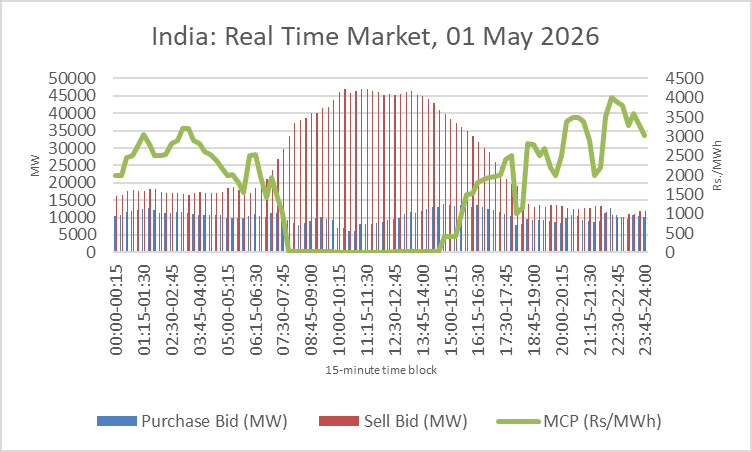
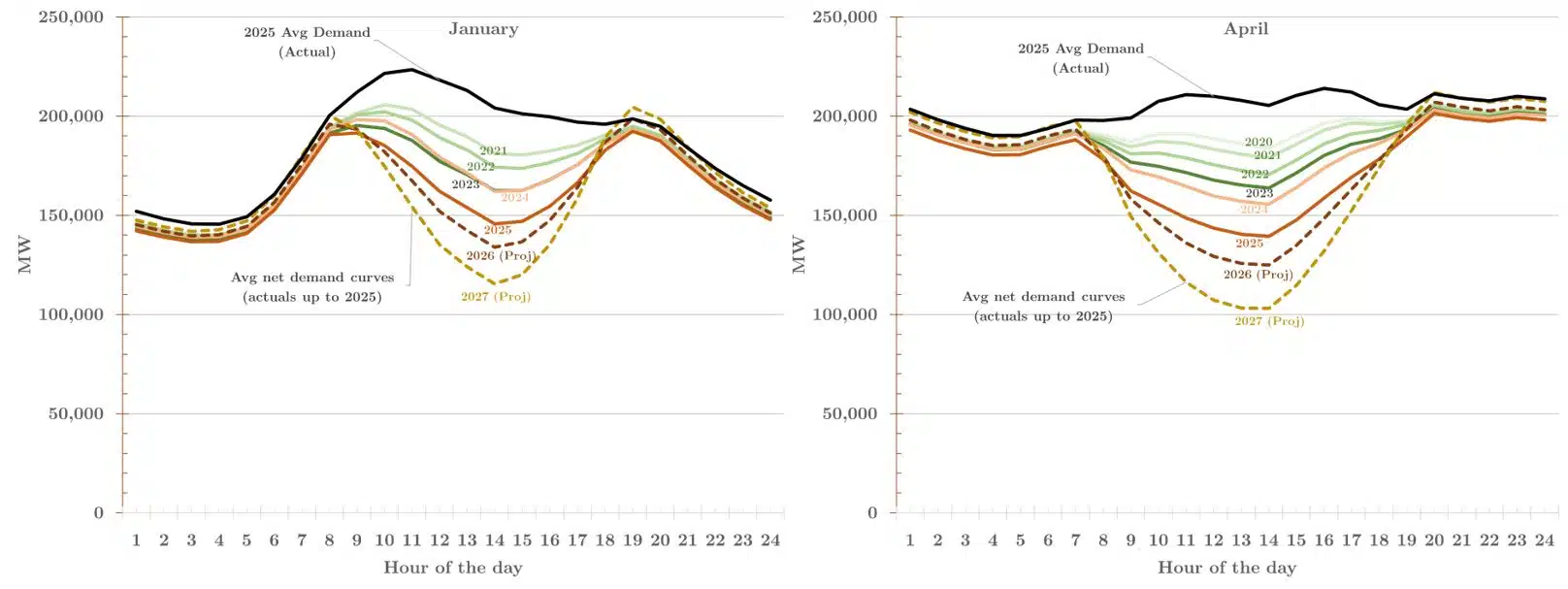
From Adding Capacity to Managing the System For many years, the focus in India was clear - add capacity, expand access, and scale renewable energy. That made sense. The system...
 APAC
APAC
The IEA shows that to successfully integrate high levels of renewables, storage, and flexibility are crucial. Interest in discussions around time-based matching, often framed as hourly matching, is growing. Many...